
Skin Cancer Check Melbourne
Early Detection Saves Lives – Book Your Skin Check in Melbourne
Have you noticed a new mole that looks different from the ones around it? Or has an old spot started to change its colour, shape, or size?
Australia has one of the highest rates of skin cancer in the world. Two in three Australians will receive a skin cancer diagnosis of some type in their lifetime. In 2025, over 17,000 new cases of melanoma alone are estimated to be diagnosed across Australia – and many of those could have been caught earlier.
If you live in or around Melbourne and want peace of mind, a professional skin cancer check is the smartest step you can take.
Our experienced GPs provide thorough full body skin checks with dermoscopy. We bulk bill eligible Medicare card holders – so you get expert care with no out-of-pocket cost.
Who Should Get a Skin Cancer Check in Melbourne?
Anyone can develop skin cancer, but some people face a higher risk. You should consider booking a skin cancer screening if you:
- Have fair skin that burns or freckles easily.
- Have a lot of moles, freckles or unusual spots on your skin.
- Have a personal or family history of melanoma or other skin cancer.
- Have had blistering sunburns in the past, especially during childhood.
- Work or spend a lot of time outdoors.
- Have previously used a solarium or tanning bed.
- Have not had a skin check in the last 12 months.
- Have noticed a mole or spot that looks new, is growing, or has changed colour.
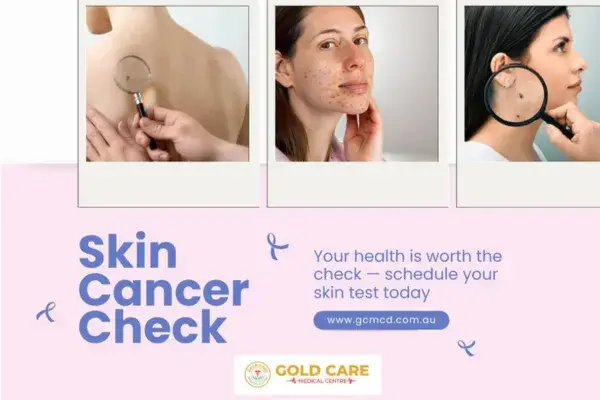
Signs and Symptoms of Skin Cancer to Watch For
Most people think skin cancer always looks like a dramatic dark spot. In reality, it can look like a lot of different things. That is why so many cases go unnoticed until they have grown bigger than they should.
Here are the warning signs to look out for on your skin.
The ABCDE Rule for Moles
Doctors and GPs across Melbourne use the ABCDE rule to spot moles that need a closer look.
- A - Asymmetry: One half of the spot looks different from the other half
- B - Border: The edges are ragged, notched, or blurry instead of smooth
- C - Colour: Multiple shades of brown, black, red, blue, or white in the same spot
- D - Diameter: Wider than 6mm (about the size of a pencil eraser), though smaller spots can still be serious
- E - Evolving: The spot is changing in size, shape, colour, or feel over weeks or months
Other Warning Signs That Are Easy to Miss
Not every skin cancer follows the ABCDE pattern. Watch out for these signs too:
- A sore that bleeds on its own and does not heal within 3 to 4 weeks
- A new spot that itches, crusts over, or feels tender when you touch it
- A shiny, pearly, or waxy bump on your face, neck, or ears
- A flat, pale, or skin-coloured patch that looks like a small scar
- A rough, scaly patch that keeps coming back in the same place
Melanoma
Melanoma is the most dangerous type. It can grow very quickly and spread to other parts of the body if not treated early. It often appears as a dark or multi-coloured spot that looks different from the moles around it. It can also appear pink or pale. Melanoma can develop anywhere on the body, including areas that are never exposed to sunlight.
Basal Cell Carcinoma (BCC)
Basal cell carcinoma is the most common type of skin cancer. It grows slowly and rarely spreads to other organs. It often appears as a shiny or pearly lump, or a flat, pink, scar-like patch. Even though it is slow growing, it can cause serious damage to the surrounding skin and tissue if left untreated.
Squamous Cell Carcinoma (SCC)
Squamous cell carcinoma appears as a scaly, red or pink patch or a firm lump. It is more likely to spread than BCC and is often found on areas of skin that have had a lot of sun exposure over the years, such as the face, ears, scalp, and hands.
Note: Do not wait to see if a spot “goes away on its own.” A professional full body skin examination by an experienced GP is the only reliable way to know what you are dealing with.
Post-Treatment Care & Recovery
Healing is just as important as treatment. We provide wound care and scar management to help your skin recover smoothly.
Our team also offers guidance on sun protection and monitoring your skin for future changes. With follow-up appointments and ongoing support, you’ll have expert care long after treatment is complete.
Trustindex verifies that the original source of the review is Google. I highly recommend Goldcare Medical Centre. The clinic is conveniently located close to Dandenong Hospital, with ample parking and easy access. The building is clean and welcoming, and the reception staff—especially Fiona—are friendly and professional. Nurse Holly is also kind and attentive. Dr. Vasu Sellathurai is exceptionally caring and trustworthy. I strongly recommend this practice to anyone needing continuous, reliable medical care.Posted onTrustindex verifies that the original source of the review is Google. The practise was clean and easy to book. Dr Vasuthan was very pleasant, thorough and knowledgeablePosted onTrustindex verifies that the original source of the review is Google. Was my first time coming to the the clinic today. I was made to feel very welcome and comfortable by staff and nurse. Clinic was clean and spacious. I went in at my appt time and the doctor was kind. Professional and Knowledgeable. I'll be happy to go back to this clinic and would recommend my friends and family goPosted onTrustindex verifies that the original source of the review is Google. I have been a patient here since the clinic is open and it’s been the best experience as i had to change GP a couple times and was disappointed at my previous one. Dr Vasuthan has been so helpful he is very knowledgable, patient and has provided me with the best care plan for my injury until i recovered.Posted onTrustindex verifies that the original source of the review is Google. I recently visited Dr. Vasuthan and had a very positive experience. He was thorough in his examination and took the time to listen to my concerns about my migraine. He provided clear advice and recommended appropriate tests to get to the root of the issue. Dr. Vasuthan was professional, caring, and made me feel comfortable throughout the appointment. I appreciated his attention to detail and the way he explained everything clearly. I would highly recommend Dr. Vasuthan to anyone seeking quality medical care.Posted onTrustindex verifies that the original source of the review is Google. New customer at Goldcare clinic and I was impressed with Dr Vasuthan's knowledge and the way he explains things is second to none. I will definitely be a returning customer, very knowledgeable GPPosted onTrustindex verifies that the original source of the review is Google. Today was my first time needing to attend this clinic GoldCare to see a GP. I genuinely had a wonderful experience. They were able to see me quite last minute and were very helpful. The lovely lady at reception who also took my call was kind, patient and really friendly, which i appreciate. I didn’t have to wait long for my turn to see Dr Sellathurai who didnt rush the appointment and took time to understand my history and current situation before explaining further what is necessary. I will definitely be back when needed. Thank youPosted onTrustindex verifies that the original source of the review is Google. I had a very beautiful experience at GoldCare Medical Centre. The doctors were professional, kind, and attentive, and every other staff member was incredibly helpful and welcoming. I felt well cared for throughout my visit and would highly recommend this centre.Posted onTrustindex verifies that the original source of the review is Google. Goldcare medical centre is gold Dr Vasu is supper and so are the staffs. The building is clean and onsight parking is very goodVerified by TrustindexTrustindex verified badge is the Universal Symbol of Trust. Only the greatest companies can get the verified badge who has a review score above 4.5, based on customer reviews over the past 12 months. Read more
Worried About a Spot That Looks Different?
We provide a thorough skin cancer check in Melbourne and nearby areas so you can get answers quickly and feel completely at ease.
Why Choose Us?
- Fully bulk billed no gap fee for Medicare card holders
- No referral needed book directly at any time
- Experienced GPs trained in skin cancer detection and management
- Trusted local practice serving the Dandenong community for years
- Compassionate, patient-centred care for all ages and backgrounds
- New patients welcome no existing relationship with our clinic required
- Multilingual team we serve Dandenong’s diverse community
Risk Factors for Skin Cancer in Melbourne
Anyone can develop skin cancer. But some people face a higher risk than others. Understanding your personal risk helps you decide how often you need a check and how careful you need to be with sun protection.
You Are at Higher Risk If You:
- Have fair skin that burns easily rather than tans
- Have light-coloured eyes (blue or green) or red or blonde hair
- Have more than 50 moles on your body, or moles that look irregular or unusually shaped
- Have a personal history of skin cancer or have been treated for it before
- Have a close family member (parent, sibling, or child) who has had melanoma
- Got blistering sunburns in childhood or early adulthood
- Have had long-term unprotected sun exposure, either through outdoor work or lifestyle
- Have used a solarium or tanning bed at any point in your life
- Are over 50, as the risk builds up with age and total UV exposure over your lifetime
- Are immunocompromised or take medications that suppress your immune system
Melbourne's UV Levels Are Higher Than You Think
Many Melbourne locals assume the UV is only a problem on hot summer days. That is not true.
Australia experiences some of the highest levels of UV radiation in the world, because of its proximity to the equator and its many clear blue-sky days. In Melbourne, UV levels regularly reach 3 or above, which is the point where sun protection becomes essential.
UV damage is cumulative. It builds up quietly over years, even on cloudy days, even through car windows, and even during short daily errands. By the time damage shows up on the surface of your skin, the underlying cell changes may have been happening for years.
Sun exposure is estimated to cause around 95% of melanoma cases in high-exposure areas like Australia, and around 99% of non-melanoma skin cancers.
People Who Work Outdoors in Melbourne
Tradespeople, landscapers, construction workers, delivery drivers, and anyone who spends long hours outside face a significantly higher lifetime UV exposure than the average office worker.
If your work regularly takes you outdoors, you are in a high-risk group and should be getting a skin check at least once a year, even if nothing looks unusual.
What to Expect at Your Skin Cancer Check at GoldCare
Feeling nervous before a skin check is completely normal. Our GPs take things at your pace and walk you through every part of the process. Here is a simple breakdown of what your visit looks like.
Step 1 - A Quick Chat About Your Health
Before anything else, your GP will have a short conversation with you. They will want to know a little about your medical background, your skin type, your daily sun habits, and whether anything on your skin has recently caught your attention. This gives your doctor a clearer picture of where to focus during the examination.
Step 2 - Head-to-Toe Skin Examination
Your GP will then carry out a thorough physical examination of your skin from head to toe. You will need to undress to your underwear for this. If you would feel more comfortable with a nurse present, just let us know. Your doctor will inspect every surface of your skin - even spots that rarely get any sun, like your scalp, the backs of your ears, your nails, and between your toes.
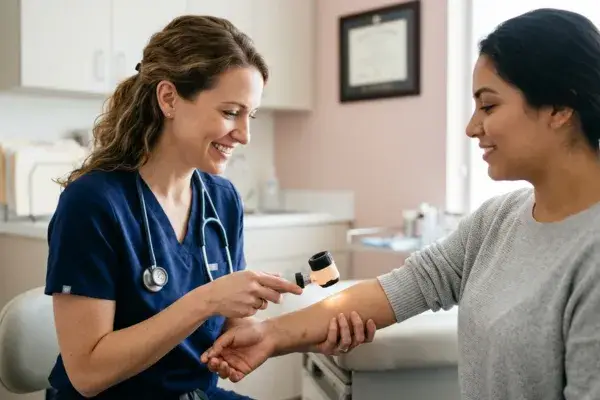
Step 3 - Closer Look with a Dermatoscope
If your GP spots anything worth a second look, they will use a dermatoscope to examine it in greater detail. This small device uses magnification and a built-in light source to reveal patterns beneath the skin surface that are not visible to the naked eye. Clinical evidence shows this tool boosts the accuracy of melanoma detection by roughly 30% over a standard visual assessment.
Step 4 - Your Results, Explained Clearly
Once the examination is complete, your GP will sit down with you and go through the results straight away. If your skin looks healthy, they will give you a personalised recommendation on how frequently you should come back. If a particular spot needs further attention, your doctor may: Remove a small skin sample for pathology testing (biopsy) Schedule a return visit to keep an eye on the spot over time Connect you with a specialist or arrange additional diagnostic imaging
FAQs
Yes. For eligible Medicare card holders, your skin cancer check is fully bulk billed with no gap fee. Bring your Medicare card to your appointment.
Yes. Melanoma in particular can develop anywhere on the body - including the soles of your feet, palms of your hands, under your nails, and even inside the mouth. This is exactly why a full body check by a trained doctor matters, not just a self-check.
Your GP will explain the finding clearly during your appointment. Depending on what they see, they may take a small tissue sample (biopsy) to send to a laboratory, arrange a follow-up visit to monitor the spot, or refer you to a specialist. Most suspicious spots turn out to be harmless - but it is always better to check and be sure.
It depends on your personal risk level. If you have no major risk factors, a check once a year is a good habit to build.
If you have fair skin, a family history of melanoma, a large number of moles, or a history of sunburns, your GP may recommend coming back every 6 months. Melbourne's UV levels reach 3 or above on many days throughout the year, including during spring and autumn, so regular checks matter more than most people realise. Your GP will tell you at the end of your appointment exactly how often you should come back based on what they find.
Yes, absolutely. Skin cancer can develop in people of all skin tones and ethnic backgrounds. While fair-skinned Australians face a statistically higher risk, people with olive, brown, or darker skin are not immune.
Do not put it off. A skin cancer check takes less than 30 minutes and could genuinely save your life.
At GoldCare Medical Centre, we make it easy no referral, no out-of-pocket cost, and no long wait.We are now accepting new patients. Book your appointment today and take your skin health seriously.