
Skin Cancer Check Dandenong
Early Detection Saves Lives – Book Your Skin Check in Dandenong
Have you noticed a new freckle that wasn’t there last summer? Or has an existing mole started to change its shape, size, or colour?
Skin cancer is the most common cancer in Australia, with 2 in 3 Australians diagnosed in their lifetime. In Victoria alone, over 3,000 people are diagnosed with melanoma annually, making early detection a necessity.
If you’ve noticed a new mole or an unusual skin mark, don’t wait. Early detection is vital – book a professional mole check or skin cancer check up at Goldcare Medical Centre today for peace of mind.
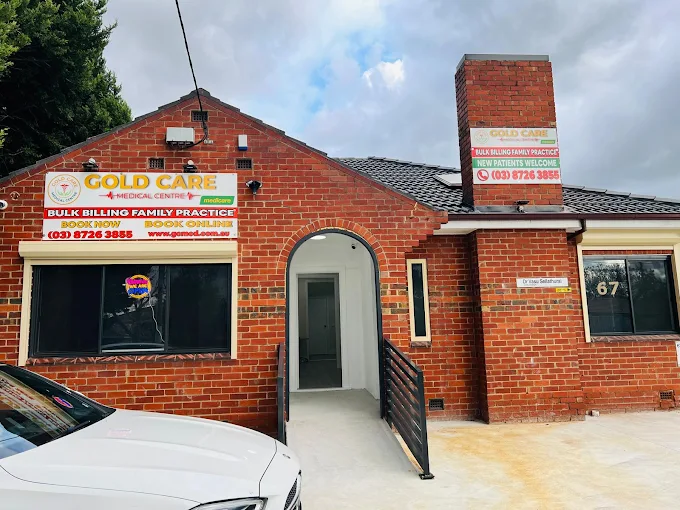
As a trusted clinic for families in Dandenong and the South East of Melbourne, our GPs provide comprehensive full body skin check services. We offer bulk billed appointments for eligible patients, ensuring expert care from a skin cancer doctor is accessible to our community.
Don’t live with uncertainty. Book your appointment in Dandenong today for expert local care.
Who Should Get a Skin Check?
Anyone can develop skin cancer, but some people face a higher risk. You should consider booking a skin cancer screening if you:
- Have fair skin that burns or freckles easily.
- Have a lot of moles, freckles or unusual spots on your skin.
- Have a personal or family history of melanoma or other skin cancer.
- Have had blistering sunburns in the past, especially during childhood.
- Work or spend a lot of time outdoors.
- Have previously used a solarium or tanning bed.
- Have not had a skin check in the last 12 months.
- Have noticed a mole or spot that looks new, is growing, or has changed colour.
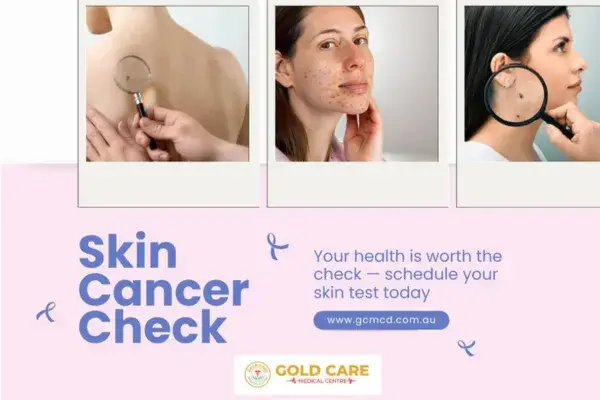
What Happens During a Skin Cancer Check at GoldCare?
We know that seeing a doctor for a skin check can feel a little daunting. Our team does everything possible to make your visit comfortable and easy. Here is exactly what to expect:
Step 1 – Your Medical History
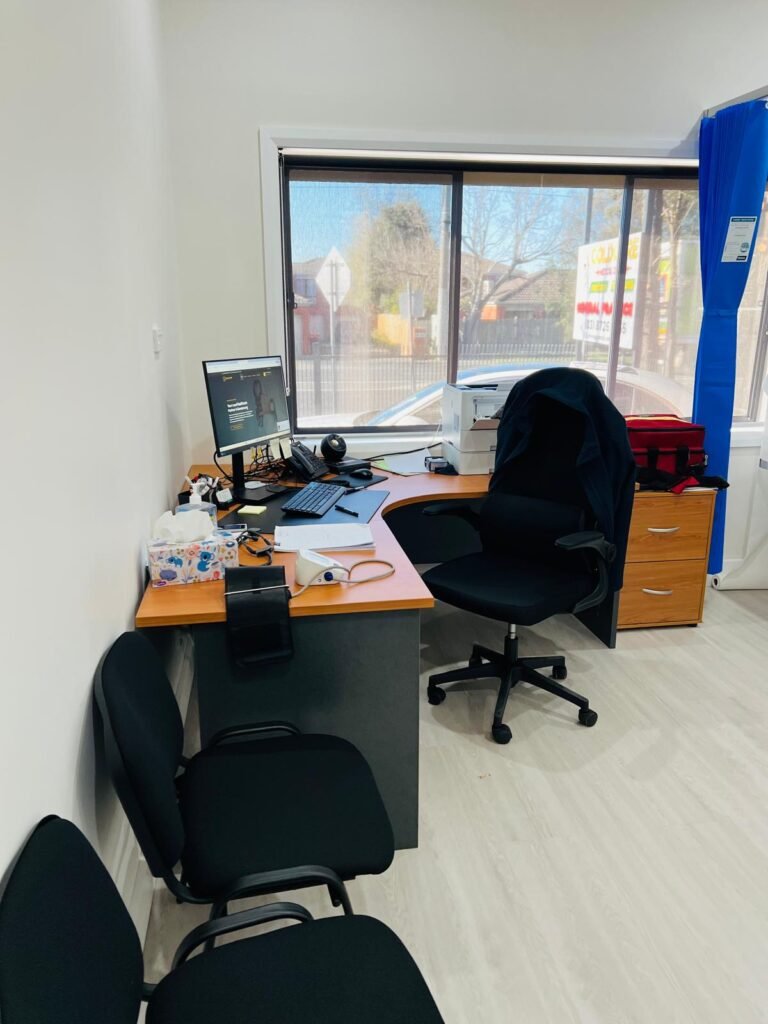
Your doctor will ask a few simple questions about your health history, your skin type, how much time you spend in the sun, and whether you have noticed any new or changing spots. This helps us understand your personal risk level.
Step 2 – Full Body Skin Examination
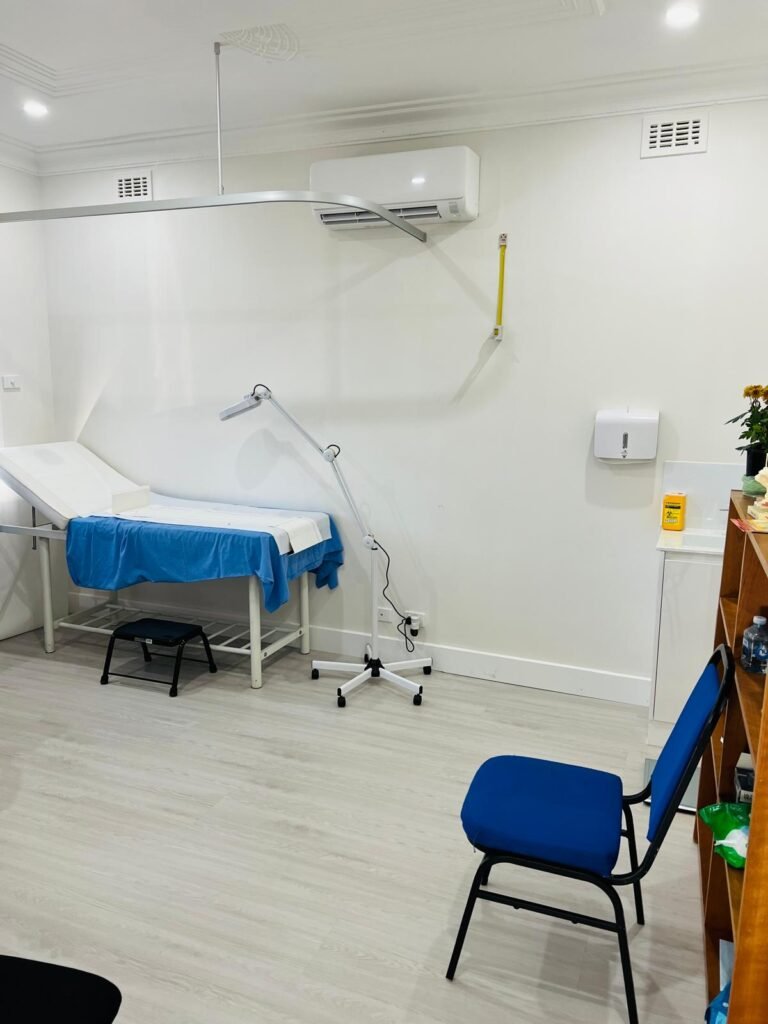
You will be asked to undress to your underwear so your doctor can carry out a proper head-to-toe skin examination. A nurse chaperone is available if you prefer. Your doctor will check every part of your skin, including areas that rarely see sunlight, such as your scalp, behind your ears, and between your toes.
Step 3 – Dermoscopy
Any spots, moles or lesions that look suspicious will be examined more closely using a dermatoscope. This tool magnifies the spot and lights it up, allowing your doctor to see features in the skin that cannot be seen with the eye alone. Research shows dermoscopy improves melanoma detection accuracy by around 30% compared to a standard visual check.
Step 4 – Results and Next Steps
Your doctor will talk through the findings with you during the same appointment. If everything looks fine, they will advise how often you should come back based on your risk profile. If a spot looks suspicious, your doctor may:
- Take a small tissue sample (a biopsy) for laboratory testing
- Arrange a follow-up appointment to monitor the spot over time
- Refer you to a specialist or for further imaging if required
The Three Main Types of Skin Cancer
Melanoma
Melanoma is the most dangerous type. It can grow very quickly and spread to other parts of the body if not treated early. It often appears as a dark or multi-coloured spot that looks different from the moles around it. It can also appear pink or pale. Melanoma can develop anywhere on the body, including areas that are never exposed to sunlight.
Basal Cell Carcinoma (BCC)
Basal cell carcinoma is the most common type of skin cancer. It grows slowly and rarely spreads to other organs. It often appears as a shiny or pearly lump, or a flat, pink, scar-like patch. Even though it is slow growing, it can cause serious damage to the surrounding skin and tissue if left untreated.
Squamous Cell Carcinoma (SCC)
Squamous cell carcinoma appears as a scaly, red or pink patch or a firm lump. It is more likely to spread than BCC and is often found on areas of skin that have had a lot of sun exposure over the years, such as the face, ears, scalp, and hands.
Your doctor will also look for actinic keratosis (also called solar keratosis), which are rough, scaly patches caused by years of sun damage. These are not cancer themselves, but they can develop into squamous cell carcinoma if left untreated.
Post-Treatment Care & Recovery
Healing is just as important as treatment. We provide wound care and scar management to help your skin recover smoothly.
Our team also offers guidance on sun protection and monitoring your skin for future changes. With follow-up appointments and ongoing support, you’ll have expert care long after treatment is complete.

 Posted on Google
 Ramachandran Balasubramaniam
Trustindex verifies that the original source of the review is Google.
I highly recommend Goldcare Medical Centre. The clinic is conveniently located close to Dandenong Hospital, with ample parking and easy access. The building is clean and welcoming, and the reception staff—especially Fiona—are friendly and professional. Nurse Holly is also kind and attentive. Dr. Vasu Sellathurai is exceptionally caring and trustworthy. I strongly recommend this practice to anyone needing continuous, reliable medical care.Posted on Google Amy RThe practise was clean and easy to book. Dr Vasuthan was very pleasant, thorough and knowledgeablePosted on Google
 Rebecca HughesWas my first time coming to the the clinic today. I was made to feel very welcome and comfortable by staff and nurse. Clinic was clean and spacious. I went in at my appt time and the doctor was kind. Professional and Knowledgeable. I'll be happy to go back to this clinic and would recommend my friends and family goPosted on Google
 Estella DantjieI have been a patient here since the clinic is open and it’s been the best experience as i had to change GP a couple times and was disappointed at my previous one. Dr Vasuthan has been so helpful he is very knowledgable, patient and has provided me with the best care plan for my injury until i recovered.Posted on Google
 Aishwarya MI recently visited Dr. Vasuthan and had a very positive experience. He was thorough in his examination and took the time to listen to my concerns about my migraine. He provided clear advice and recommended appropriate tests to get to the root of the issue. Dr. Vasuthan was professional, caring, and made me feel comfortable throughout the appointment. I appreciated his attention to detail and the way he explained everything clearly. I would highly recommend Dr. Vasuthan to anyone seeking quality medical care.Posted on Google
 luka siljegovicNew customer at Goldcare clinic and I was impressed with Dr Vasuthan's knowledge and the way he explains things is second to none. I will definitely be a returning customer, very knowledgeable GPPosted on Google
 Bibi neda MozafariToday was my first time needing to attend this clinic GoldCare to see a GP. I genuinely had a wonderful experience. They were able to see me quite last minute and were very helpful. The lovely lady at reception who also took my call was kind, patient and really friendly, which i appreciate. I didn’t have to wait long for my turn to see Dr Sellathurai who didnt rush the appointment and took time to understand my history and current situation before explaining further what is necessary. I will definitely be back when needed. Thank youPosted on Google
 Idegwu EjuraI had a very beautiful experience at GoldCare Medical Centre. The doctors were professional, kind, and attentive, and every other staff member was incredibly helpful and welcoming. I felt well cared for throughout my visit and would highly recommend this centre.Posted on Google
 Suresh RajkumarGoldcare medical centre is gold Dr Vasu is supper and so are the staffs. The building is clean and onsight parking is very goodVerified by TrustindexTrustindex verified badge is the Universal Symbol of Trust. Only the greatest companies can get the verified badge who has a review score above 4.5, based on customer reviews over the past 12 months. Read more
Worried About a Spot That Looks Different?
We provide a thorough skin cancer check in Dandenong and nearby areas so you can get answers quickly and feel completely at ease.
Why Choose Us?
- Fully bulk billed no gap fee for Medicare card holders
- No referral needed book directly at any time
- Experienced GPs trained in skin cancer detection and management
- Trusted local practice serving the Dandenong community for years
- Compassionate, patient-centred care for all ages and backgrounds
- New patients welcome no existing relationship with our clinic required
- Multilingual team we serve Dandenong’s diverse community
FAQs
For most adults in Australia, a professional skin cancer check once a year is recommended. If you are at higher risk, your doctor may suggest every 6 months. Here is a simple guide:
- Low risk: Once every 1 to 2 years
- Moderate risk: Once a year
- High risk (history of skin cancer, many moles, fair skin, outdoor job): Every 6 months
Between professional checks, do a self-skin examination at home every 1 to 3 months. Look at your whole body in good lighting and note any changes. If something new appears or an existing spot changes, book an appointment right away.
No. You do not need a referral from any other doctor. You can book directly with us online or by phone. Simply call 03 8726 3855 or visit gcmcd.com.au to make an appointment.
A standard full body skin check takes around 15 to 30 minutes. If your doctor needs to examine specific spots more closely or discuss results in detail, the appointment may run a little longer.
Yes. Melanoma in particular can develop anywhere on the body, including areas that never see sunlight such as the soles of the feet, palms of the hands, under nails, and even inside the mouth. This is one reason why a full body skin check by a trained doctor is important, not just a self-check.
Your doctor will explain the finding clearly during your appointment. Depending on what they see, they may take a small tissue sample (a biopsy) to send to a laboratory, arrange a follow-up visit to monitor the spot, or refer you to a specialist for further care. Most suspicious spots turn out to be harmless, but it is always better to check.
Yes. While people with fair skin carry a higher risk, skin cancer can affect people of any skin tone. Melanoma in people with darker skin tends to appear in less obvious locations such as the palms, soles, and under nails. Everyone benefits from regular skin monitoring.
A skin cancer check is a full body examination by a doctor using dermoscopy to look for suspicious lesions. Mole mapping goes a step further it uses advanced digital photography to create a detailed record of every mole on your body, which is then compared at future visits to detect even the smallest changes. Mole mapping is usually recommended for higher-risk patients.
Do not put it off. A skin cancer check takes less than 30 minutes and could genuinely save your life.
At GoldCare Medical Centre, we make it easy no referral, no out-of-pocket cost, and no long wait.We are now accepting new patients. Book your appointment today and take your skin health seriously.