Skin Cancer Surgery Dandenong
Getting told you might need skin cancer surgery is scary.
Most people don’t know what comes next. Do you need a specialist? Will it hurt? Is it covered by Medicare? These are real questions – and you deserve straight answers from a doctor you can actually get to.
Skin cancer is the most common cancer in Australia – 2 in 3 Australians will face it in their lifetime. In Victoria, more than 3,000 people are diagnosed with melanoma every single year.
But here is what most people don’t realise: treated early, most skin cancers are completely curable.
Our GPs in Dandenong assess, treat and remove skin cancers right here at your local clinic – no long hospital waits, no confusing referral chains. Minor procedures are done in-clinic, and if you need specialist care, we coordinate everything for you.
Bulk billed for Medicare card holders. No referral needed. New patients welcome.
Who Needs Skin Cancer Surgery?
Your doctor will recommend surgery based on the type and stage of your skin cancer, as well as factors specific to your health and circumstances.
Surgery is typically the first-line treatment for:
- Basal cell carcinoma (BCC) the most common skin cancer in Australia, making up around 70% of all non-melanoma skin cancers
- Squamous cell carcinoma (SCC) the second most common, and the type responsible for most deaths from non-melanoma skin cancer
- Melanoma the most dangerous form; early surgical removal is critical
- Recurrent skin cancers that have returned after a previous treatment
- Lesions on cosmetically or functionally sensitive areas such as the face, hands, or scalp
Skin Cancer Surgery Types We Support
No two skin cancers are the same, and neither is the treatment. At GoldCare Medical Centre in Dandenong, our doctors assess each patient individually and guide them through the most appropriate surgical option, whether that is a simple in-clinic excision or a referral to a specialist for a more complex procedure. We cover the full range of skin cancer surgery types, so you never have to figure out where to go next on your own.
Surgical Excision
This is the standard approach for most skin cancers, and it is one of the most common procedures our GoldCare doctors perform. The area is numbed with local anaesthetic, the lesion is carefully cut out along with a border of healthy-looking skin around it, and the tissue is sent to a pathology lab to confirm full removal.
Results are usually back within a week. If the pathology report shows cancer cells at the edge of the excision known as a positive margin a further procedure may be needed, and we will walk you through that process.
Surgical excision is suitable for most BCCs, early-stage SCCs, and small melanomas. It is quick, effective, and leaves a clean linear scar that generally fades well over time.
Mohs Surgery (Mohs Micrographic Surgery)
Mohs surgery is a specialised technique performed by a Mohs-trained surgeon. It involves removing thin layers of skin one at a time, checking each layer under a microscope before proceeding. This continues until only cancer-free tissue remains.
The main advantage is precision. It removes as little healthy tissue as possible while achieving very high clearance rates, making it particularly well suited to skin cancers on the face, ears, nose, and eyelids.
Mohs skin cancer surgery is generally recommended for recurrent cancers, ill-defined tumours, or cases where standard excision margins would produce a significant cosmetic impact. While Mohs requires specialist facilities, GoldCare Medical Centre makes sure you are not left to navigate this alone. Our GPs will refer you to an accredited Mohs surgeon, coordinate your care, and remain your point of contact throughout the process.
Curettage and Electrodesiccation
In this technique, the doctor scrapes away the tumour using a curette a sharp, spoon-shaped instrument, then applies a controlled electric current to destroy any remaining cancer cells and stop bleeding. The process is sometimes repeated in layers for thoroughness.
This approach works well for superficial BCCs and some early SCCs on the trunk and limbs. It is fast, effective in the right cases, and can be performed at our Dandenong clinic without the need for a referral. Your GoldCare doctor will assess whether your lesion is a good candidate during your consultation.
Cryotherapy
Cryotherapy uses liquid nitrogen to freeze and destroy abnormal skin cells. It is mainly used for actinic keratoses (precancerous lesions caused by sun damage) and very early, superficial skin cancers. The treated area turns red and blistered, then forms a scab that falls off within a few weeks as healthy skin regrows underneath.
It is a non-surgical, outpatient option with minimal downtime and no stitches required. GoldCare Medical Centre offers cryotherapy as part of our broader skin cancer management services, and it is a practical choice for patients who need treatment for sun-damaged skin before it progresses further.
Skin Flap and Skin Graft Reconstruction
When a skin cancer is large or sits in a location where simple closure is not possible, reconstructive techniques may be needed after excision. A skin flap involves rotating nearby tissue to cover the wound, while a skin graft takes a thin layer of skin from another part of the body to repair the defect.
Both approaches aim to restore function and appearance as naturally as possible. These procedures are performed by specialist plastic or reconstructive surgeons. At GoldCare, we coordinate these referrals on your behalf, brief the specialist on your case, and continue to support your recovery and follow-up care once the procedure is complete.
What to Expect at Your Appointment
Step 1 : Skin check and assessment
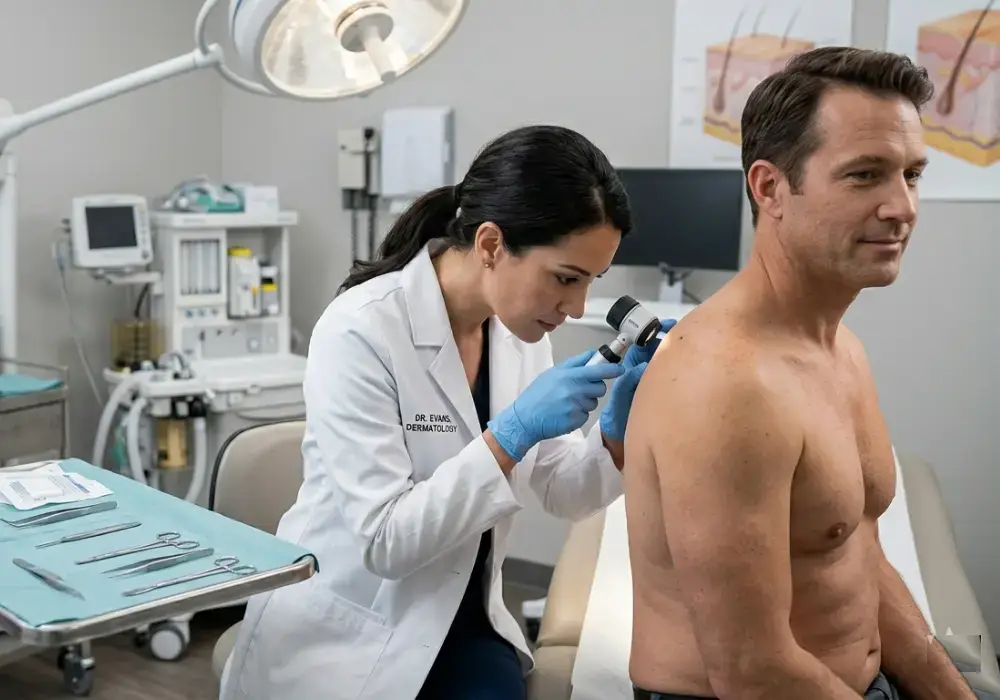
If you have noticed a changing spot, unusual mole, or non-healing lesion, book a consultation at GoldCare. Our doctors will take a full medical history, examine the area in question, and may use dermoscopy (a specialised magnifying tool) for a closer look.
Step 2 : Biopsy (if required)
If a lesion looks suspicious, a small biopsy is taken and sent to a pathology lab. You will be called with results once they are available, usually within one to two weeks.
Step 3 : Surgery planning
If the biopsy confirms a skin cancer, your doctor will discuss the best surgical approach, go over the expected results and risks, and answer any questions you have. Consent is obtained before proceeding.
Step 4 : The procedure
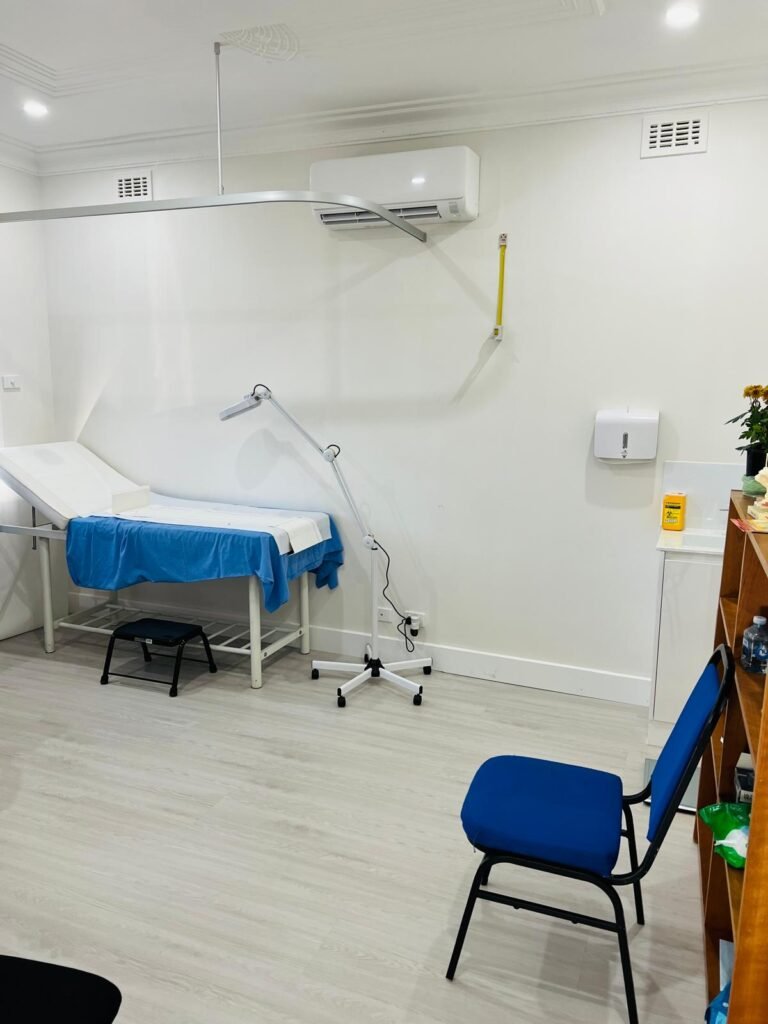
Most minor excisions are performed in clinic under local anaesthetic and take between 15 and 30 minutes. You will feel pressure but not pain. Stitches are placed to close the wound, and you will receive clear aftercare instructions before leaving.
Step 5 : Follow-up and pathology review
Your pathology results are reviewed at a follow-up appointment. If the margins are clear, no further surgery is needed. If cancer cells are found at the margin, your doctor will discuss next steps with you.
Post-Treatment Care & Recovery
Healing is just as important as treatment. We provide wound care and scar management to help your skin recover smoothly.
Our team also offers guidance on sun protection and monitoring your skin for future changes. With follow-up appointments and ongoing support, you’ll have expert care long after treatment is complete.

Trustindex verifies that the original source of the review is Google. I highly recommend Goldcare Medical Centre. The clinic is conveniently located close to Dandenong Hospital, with ample parking and easy access. The building is clean and welcoming, and the reception staff—especially Fiona—are friendly and professional. Nurse Holly is also kind and attentive. Dr. Vasu Sellathurai is exceptionally caring and trustworthy. I strongly recommend this practice to anyone needing continuous, reliable medical care.Posted onTrustindex verifies that the original source of the review is Google. The practise was clean and easy to book. Dr Vasuthan was very pleasant, thorough and knowledgeablePosted onTrustindex verifies that the original source of the review is Google. Was my first time coming to the the clinic today. I was made to feel very welcome and comfortable by staff and nurse. Clinic was clean and spacious. I went in at my appt time and the doctor was kind. Professional and Knowledgeable. I'll be happy to go back to this clinic and would recommend my friends and family goPosted onTrustindex verifies that the original source of the review is Google. I have been a patient here since the clinic is open and it’s been the best experience as i had to change GP a couple times and was disappointed at my previous one. Dr Vasuthan has been so helpful he is very knowledgable, patient and has provided me with the best care plan for my injury until i recovered.Posted onTrustindex verifies that the original source of the review is Google. I recently visited Dr. Vasuthan and had a very positive experience. He was thorough in his examination and took the time to listen to my concerns about my migraine. He provided clear advice and recommended appropriate tests to get to the root of the issue. Dr. Vasuthan was professional, caring, and made me feel comfortable throughout the appointment. I appreciated his attention to detail and the way he explained everything clearly. I would highly recommend Dr. Vasuthan to anyone seeking quality medical care.Posted onTrustindex verifies that the original source of the review is Google. New customer at Goldcare clinic and I was impressed with Dr Vasuthan's knowledge and the way he explains things is second to none. I will definitely be a returning customer, very knowledgeable GPPosted onTrustindex verifies that the original source of the review is Google. Today was my first time needing to attend this clinic GoldCare to see a GP. I genuinely had a wonderful experience. They were able to see me quite last minute and were very helpful. The lovely lady at reception who also took my call was kind, patient and really friendly, which i appreciate. I didn’t have to wait long for my turn to see Dr Sellathurai who didnt rush the appointment and took time to understand my history and current situation before explaining further what is necessary. I will definitely be back when needed. Thank youPosted onTrustindex verifies that the original source of the review is Google. I had a very beautiful experience at GoldCare Medical Centre. The doctors were professional, kind, and attentive, and every other staff member was incredibly helpful and welcoming. I felt well cared for throughout my visit and would highly recommend this centre.Posted onTrustindex verifies that the original source of the review is Google. Goldcare medical centre is gold Dr Vasu is supper and so are the staffs. The building is clean and onsight parking is very goodVerified by TrustindexTrustindex verified badge is the Universal Symbol of Trust. Only the greatest companies can get the verified badge who has a review score above 4.5, based on customer reviews over the past 12 months. Read more
Worried About a Spot That Looks Different?
We provide a thorough Skin Cancer Surgery in Dandenong and nearby areas so you can get answers quickly and feel completely at ease.
Why Choose Us?
- Fully bulk billed no gap fee for Medicare card holders
- No referral needed book directly at any time
- Experienced GPs trained in skin cancer detection and management
- Trusted local practice serving the Dandenong community for years
- Compassionate, patient-centred care for all ages and backgrounds
- New patients welcome no existing relationship with our clinic required
- Multilingual team we serve Dandenong’s diverse community
FAQs
You do not need a referral to see a GP at GoldCare Medical Centre. Simply book an appointment directly. If your skin concern requires a specialist such as a dermatologist, plastic surgeon, or Mohs surgeon, your GP will provide that referral. A referral is required to access Medicare rebates for specialist appointments.
The injection of local anaesthetic may cause a brief stinging sensation, but the procedure itself should not be painful. You may feel pressure or movement, but your doctor will ensure the area is fully numb before starting. If you have concerns about needle phobia or anxiety, let us know and we can discuss options to help you feel more comfortable.
A minor excision typically takes between 15 and 30 minutes from start to finish. More complex procedures, or those involving reconstruction, take longer. Your doctor will give you a realistic estimate at your consultation.
Yes, any surgery leaves a scar. The size and visibility of your scar depends on the size of the lesion, its location, your skin type, and how well you care for the wound afterwards. Scars generally fade significantly over 6 to 12 months. Keeping the wound moist during healing and applying sunscreen to the area afterwards helps minimise long-term scarring.
If pathology shows cancer cells at the edge of the excision (a positive margin), your doctor will discuss further surgery or an alternative treatment. This does not mean the cancer has spread it simply means another procedure is needed to achieve full clearance. Re-excision is common and effective.
Most patients can return to light daily activities within a day or two. More demanding activities including exercise, heavy lifting, and sport should be avoided for two to four weeks, or as advised by your doctor. Full wound healing typically takes one to three weeks for small excisions, and longer for larger wounds or grafts.
Medicare covers a range of skin cancer procedures when they are performed by a registered medical practitioner and meet the clinical criteria. At GoldCare, our bulk billing model means most standard consultations and minor procedures attract no out-of-pocket cost for Medicare card holders. Private health insurance generally applies to procedures performed in a hospital setting. Where any gap fees are expected, we will advise you in advance.
Concerned about a spot on your skin? Don't wait.
Early treatment is the single most effective thing you can do to protect yourself from serious skin cancer. GoldCare Medical Centre in Dandenong is here to help with experienced GPs, bulk billing, and a genuine commitment to your long-term health.